Biography
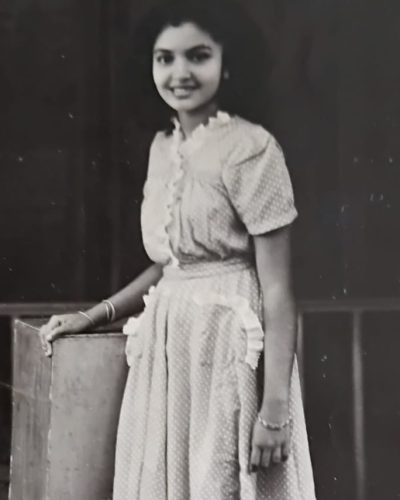
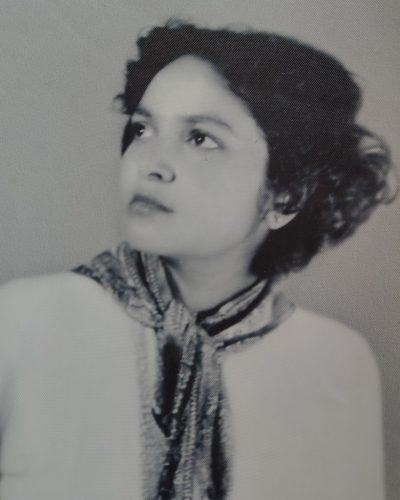
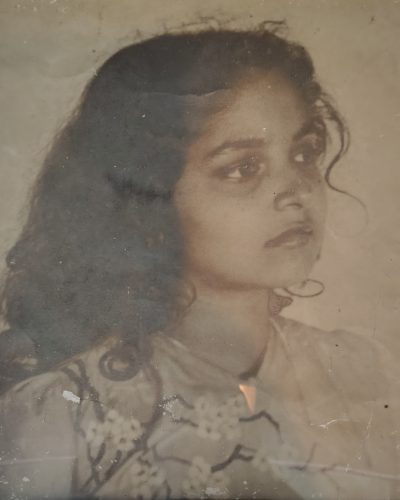
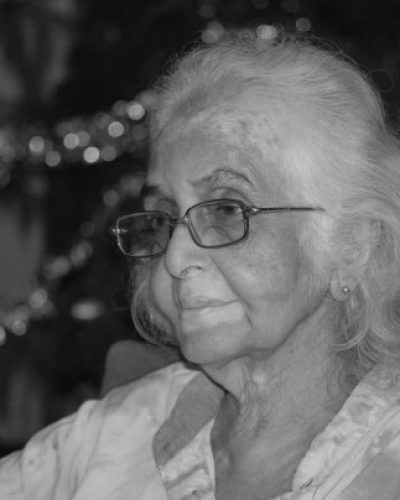
SWANEE jayawardene
Artist • Modernist • Textile Pioneer (1930–2010)
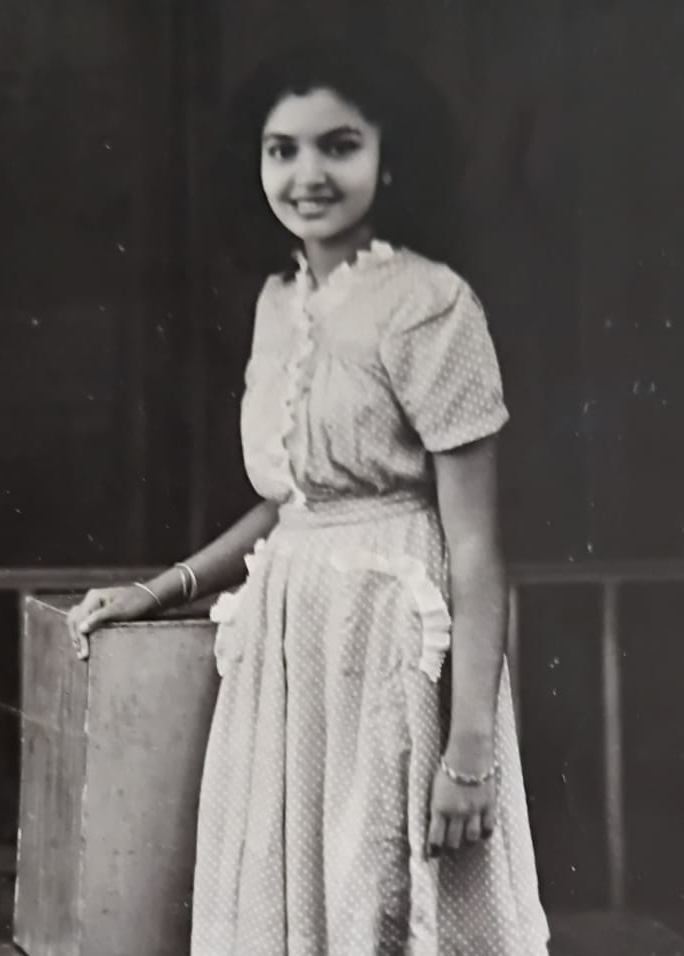
Swanee Jayawardene (born Suvenitha Monica Jayawardene) was a Sri Lankan modernist painter and textile innovator whose work helped redefine the relationship between fine art, craft, and everyday life in mid-twentieth-century Ceylon.
Working across painting, drawing, batik, and fashion, she belonged to a generation of artists who shaped the visual language of modern Sri Lankan art during and after independence. A member of the Colombo ’43 Group, she exhibited alongside the country’s leading modernists and developed a distinctive practice that merged European modernist influences with deeply personal and culturally rooted forms of expression.
Today, she is recognized not only as a painter, but as one of the earliest artists in Sri Lanka to treat textiles as serious contemporary art.
Early life and training
Born in 1930 and educated at Good Shepherd’s Convent, Kotahena, Swanee demonstrated artistic ability from an early age. At just seventeen, she won the highest award at the Ceylon Society of Arts annual exhibition, marking her as one of the most promising young artists of her generation. She received formal training under K. S. Perera and Cora Abraham, and later attended the art school conducted by Stanley Abeysinghe. On the advice of senior artists including Geoffrey Beling, she continued her development under Harry Pieris, one of the leading figures of the ’43 Group. These mentors placed her within the intellectual and artistic circles that would define modernism in Ceylon. Alongside her studio practice, she also worked as an art teacher at Bishop’s College, nurturing future generations while developing her own evolving visual language.
The ’43 Group and modernist painting
In the 1950s, Swanee became associated with the ’43 Group, the influential collective that rejected colonial academic realism in favour of experimentation and modernist expression.
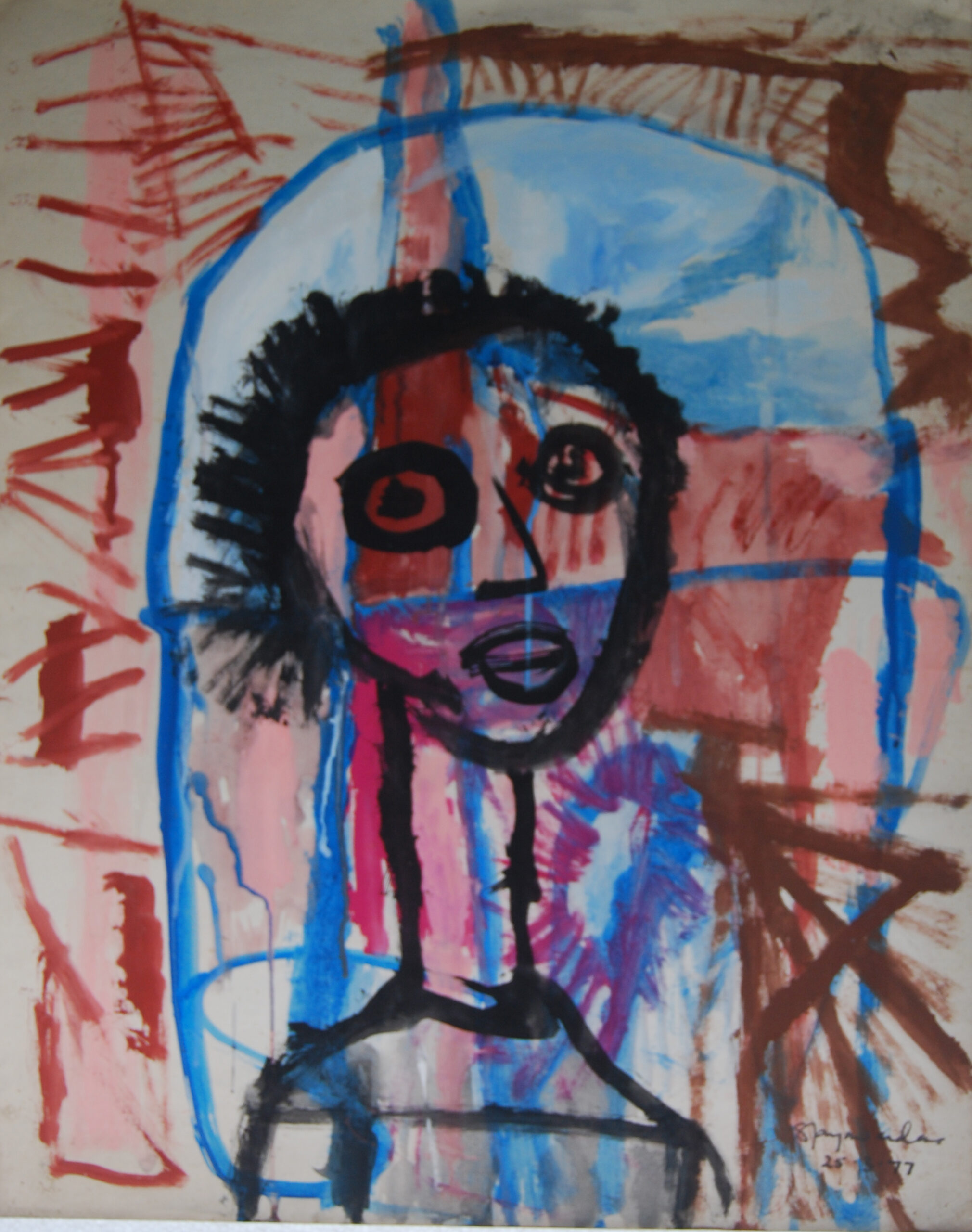
Her paintings from this period are marked by:- fluid, searching line work
- expressive colour
- psychological and symbolic forms
- an early move toward abstraction
Influenced by post-impressionism, fauvism, cubism, and emerging abstract expressionism, her work explored emotional interiority rather than literal representation. She helped lay foundations for abstract art in Sri Lanka.
Her practice was never derivative; instead, she translated global modernist ideas into a distinctly local and personal visual language.
Swanee exhibited locally and internationally, including participation with the ’43 Group at the Venice Biennale in 1960, placing her work within a global modern art context at a moment when the Biennale also featured major twentieth-century figures such as Picasso, Braque, and Léger.
Batik, textiles, and the expansion of art into life
While painting was central to her early reputation, Swanee’s most transformative contributions emerged through her exploration of batik and tie-dye.
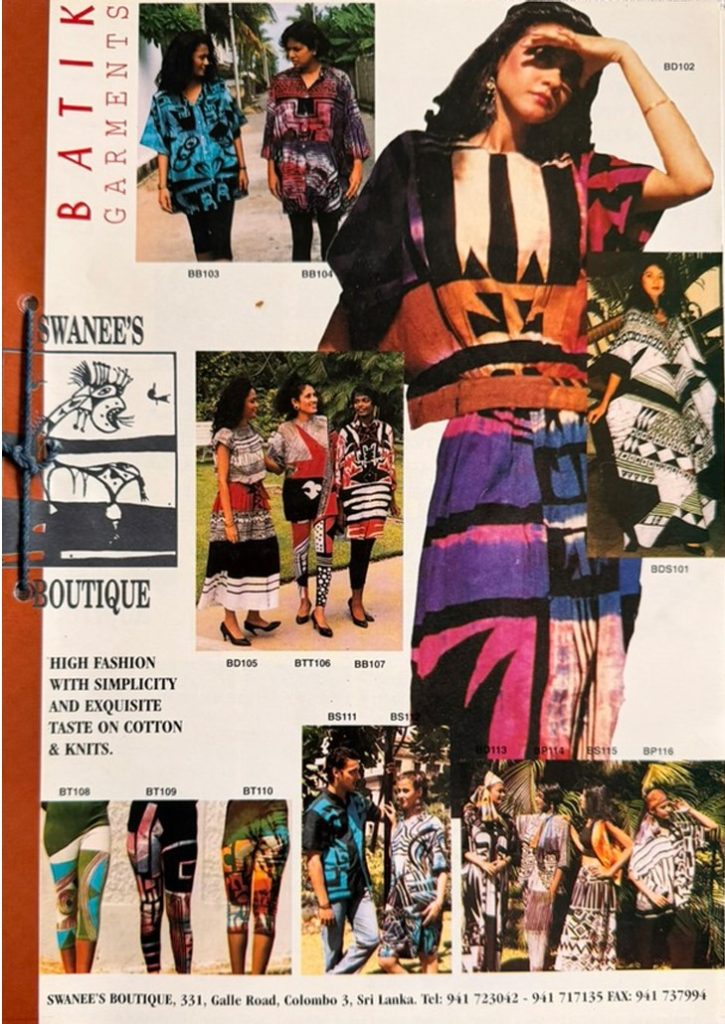
In the 1960s she began experimenting with batik and tie-dye, developing innovative hand-dyeing methods that fused painterly thinking with fabric. She developed a technique she called “Explosion Batiks”, which married saturated colour fields with dynamic dye effects — an approach that elevated textile craft into an artistic medium in its own right.
Her textile work was entrepreneurial as well as artistic. Starting from her home studio, demand for her dyed and batiked fabrics, garments, and accessories grew rapidly, eventually leading her to open a dedicated outlet for the Swanee fashion brand. Products under her label were exhibited and sold internationally — in Germany, France, Japan, the UK, and beyond — bringing Sri Lankan textile art to global audiences.
At a time when craft was often considered separate from “high art,” Swanee collapsed the distinction. Her textiles were not decorative afterthoughts but extensions of her artistic practice.
Through this work she:
- elevated batik into contemporary art
- created employment for Sri Lankan artisans
- introduced hand-crafted design to international audiences
- shaped a new visual identity for Sri Lankan fashion
Teaching, Family, and Legacy
Swanee’s influence spread beyond her own studio. At Bishop’s College, she not only inspired students to explore expressive freedom, she also organized public exhibitions inspired by contemporary events and emotions, making art a lively part of social engagement.
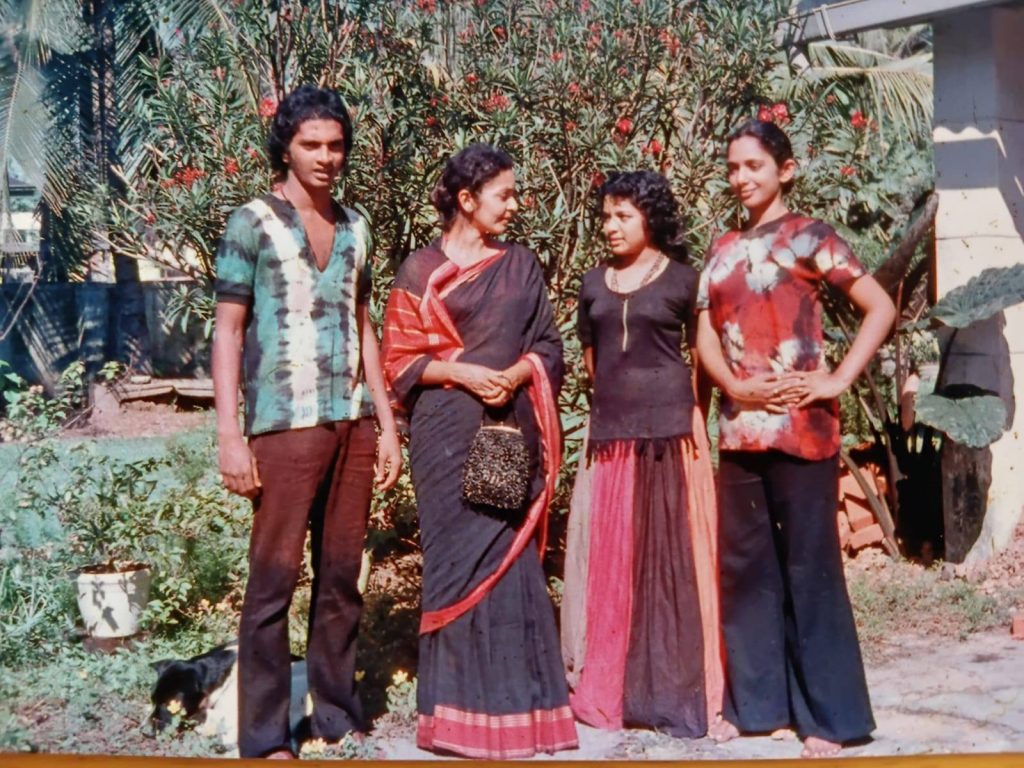
She married journalist and musician Harold Jayawardene, with whom she had three children: Manel, Menik, and Rohan. Her family participated deeply in the life of her work — from managing the boutique to contributing ideas in design and presentation.
A significant episode in her life was the
loss of approximately 400–500 early paintings,
taken by someone who promised to exhibit them but never returned them. The loss affected her deeply and led to a period in which she painted less, but she eventually recovered and continued creating until her death in 2010.Today
Swanee Jayawardene’s paintings and textiles remain in private and family collections, with renewed interest from scholars, galleries, and institutions internationally.
Her legacy continues through Swanee, now stewarded by the next generation of her family, who preserve her archive and reinterpret her original designs for contemporary audiences — ensuring that her belief in art as something lived, worn, and experienced continues into the present.
Her life stands as a testament to artistic independence, experimentation, and the power of creativity to move fluidly between canvas, cloth, and culture.


Awards
1990
Vestibulum vitae mattis turpis fusce aliquam eu aliquam
Non ut consequat hendrerit neque at
1992
Praesent et lectus eleifend feugiat placerat
Lorem et fermentum mauris vitae sit
1997
Suspendisse rutrum consequat imperdiet tellus sed
Pellentesque pulvinar ultrices morbi at nunc
2000
Imperdiet egestas justo nunc, nunc sed consequat
Non ut consequat hendrerit neque at
2005
Viverra luctus in habitant arcu placerat consectetur
Lorem et fermentum mauris vitae sit
2012
Velit lacus porttitor urna vitae
Pellentesque pulvinar ultrices morbi at nunc

Early life and training
Born in 1930 and educated at Good Shepherd’s Convent, Kotahena, Swanee demonstrated artistic ability from an early age. At just seventeen, she won the highest award at the Ceylon Society of Arts annual exhibition, marking her as one of the most promising young artists of her generation.
She received formal training under K. S. Perera and Cora Abraham, and later attended the art school conducted by Stanley Abeysinghe. On the advice of senior artists including Geoffrey Beling, she continued her development under Harry Pieris, one of the leading figures of the ’43 Group. These mentors placed her within the intellectual and artistic circles that would define modernism in Ceylon.
By the age of 19, Swanee had already begun her tenure as an art teacher at Bishop’s College. She was the first to introduce batik into a school art curriculum, revolutionising how the medium was taught and perceived. In this role, she nurtured future generations of artists while simultaneously refining her own evolving visual language.
The ’43 Group and modernist painting
In the 1950s, Swanee became associated with the ’43 Group, the influential collective that rejected colonial academic realism in favour of experimentation and modernist expression.
Influenced by post-impressionism, fauvism, cubism, and emerging abstract expressionism, her work explored emotional interiority rather than literal representation. She helped lay foundations for abstract art in Sri Lanka.
Her practice was never derivative; instead, she translated global modernist ideas into a distinctly local and personal visual language.
Swanee exhibited locally and internationally, including participation with the ’43 Group at the Venice Biennale in 1960, placing her work within a global modern art context at a moment when the Biennale also featured major twentieth-century figures such as Picasso, Braque, and Léger.
Multidisciplinary Practice and Applied Color
Teaching, Family, and Legacy
Swanee’s influence extended well beyond her studio practice. As an educator at Bishop’s College, she championed expressive freedom, organizing public student exhibitions responsive to contemporary social themes. Her personal life was closely intertwined with Colombo’s cultural milieu through her marriage to journalist and musician Harold Jayawardene. Together with their three children—Manel, Menik, and Rohan—her studio evolved into a collaborative space of multidisciplinary experimentation. This creative environment culminated in avant-garde presentations such as “Implosion,” a landmark performance that fused bold color theory, textile design, and live jazz into a singular modern art form.
Today
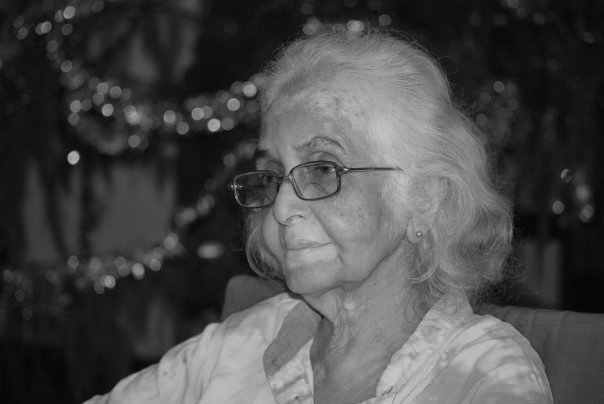
Swanee Jayawardene passed away in 2010, her paintings and textiles remain in private and family collections, with renewed interest from scholars, galleries, and institutions internationally.
Her legacy continues through Swanee, now stewarded by the next generation of her family, who preserve her archive and reinterpret her original designs for contemporary audiences – ensuring that her belief in art as something lived, worn, and experienced continues into the present.
Her life stands as a testament to artistic independence, experimentation, and the power of creativity to move fluidly between canvas, cloth, and culture.